
The Carrot Fallacy: Why you should stop trying to motivate your team
This post provides the underlying foundation for my ‘Motivation to Start the Week’ weekly inspiration piece.
Blog
Short, hands-on articles about self-leadership, team dynamics and entrepreneurial responsibility.
This post provides the underlying foundation for my ‘Motivation to Start the Week’ weekly inspiration piece.

Before we get back into the swing of things today – here’s a ritual I’ve been using for years and which I’ve also used in keynote speeches.

It was a perfectly ordinary business flight. What I hadn’t expected was that, by the end of the film, I was sitting in my seat with tears in my eyes...

Before I became a production manager, I was a DJ.
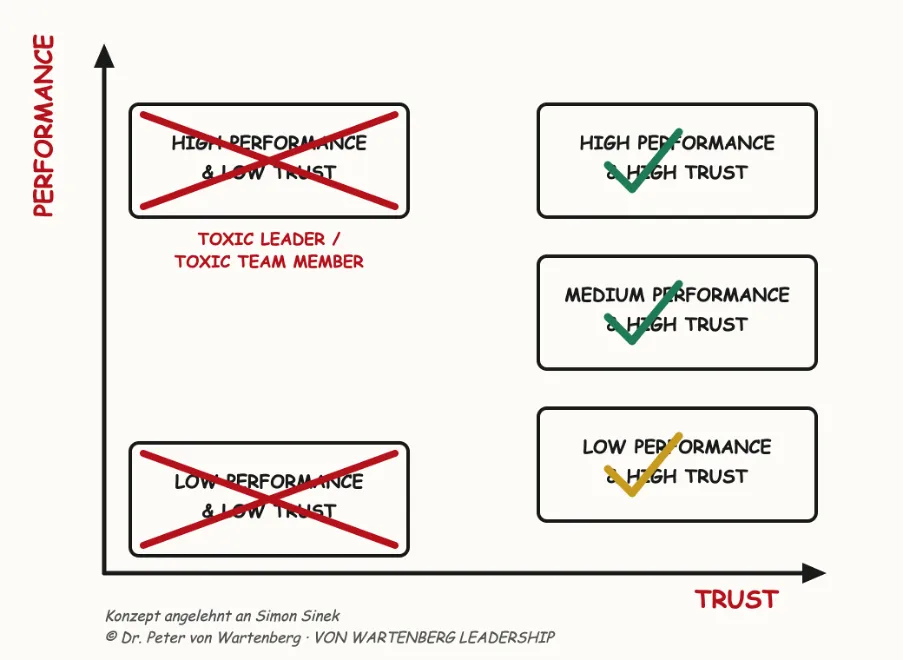
Over five years ago, I described on LinkedIn a method that I had already been practising for years at that time – and which I still practise today: in my annual appraisal interviews, I assess not only a person’s performance, but also, equally, the trust I have in him or her. And Simon Sinek has summed it up perfectly!

High performance rests on two pillars: psychological safety and accountability. Not just one of them, but both. And in that order.

There is a lot of talk about teams – about team spirit, culture and cohesion. What is rarely made clear, however, is that not every group working together on a task is a team. And not every team needs to be a high-performing team. Yet it is precisely this distinction that determines what kind of leadership, structure and expectations are actually appropriate.