· 6 min read
The moral vacuum – why good decisions sometimes only begin once morality is set aside
We’re having another round of very moralistic discussions at the moment. In politics, in the media, in meetings. And to be honest: we Germans are rather good at it. We’re quick to decide what’s right and what’s wrong – and we’re not shy about saying so.
I’m noticing this particularly in negotiations at the moment. The world is increasingly negotiating on the basis of interests rather than according to rules that everyone considers valid. Anyone who sits down at the table armed only with their moral compass has often already lost before they’ve even started. (I’ll be writing a separate post on this soon – covering the Harvard approach and/or the Schranner approach.)
Today I want to talk about something more fundamental:
How do you make difficult decisions when your conscience has already had its say before you’ve even had a chance to think things through?
A tip I didn’t want to take at first
My long-standing coach, Dr Gerhard Kettgen, has time and again guided me through difficult decisions by referring me to the so-called a space devoid of morality pointed out. At first, I was sceptical. I didn’t want to be immoral – and ‘morally neutral’ sounded suspiciously like that.
Over time, and above all with practice, this has become one of the most valuable pieces of advice I have ever received.
What the ‘amoral space’ is – and what it is not
First things first: the ‘morally neutral space’ is not a free pass. It does not open the door to immorality. The enrichment of individuals, underhand dealings, things like those seen in the financial crisis – that has nothing to do with a moral vacuum. That is a matter of ethics, and there are clear boundaries there.
What it’s all about: The amoral space objective. He separates facts from their interpretation. For a moment, you consciously refrain from making moral judgements – and suddenly, far more possible solutions become conceivable.
It frees you from what Gerhard Everyday ethics refers to these internal pressures, such as ‘you shouldn’t do that’, ‘that’s not proper’ and ‘what will other people think?’. They narrow one’s perspective, hinder performance and often ultimately lead to burnout or feeling overwhelmed.
And: A space free from moral constraints resolves inner contradictions. Those who resolve them can take a clear and firm stance.
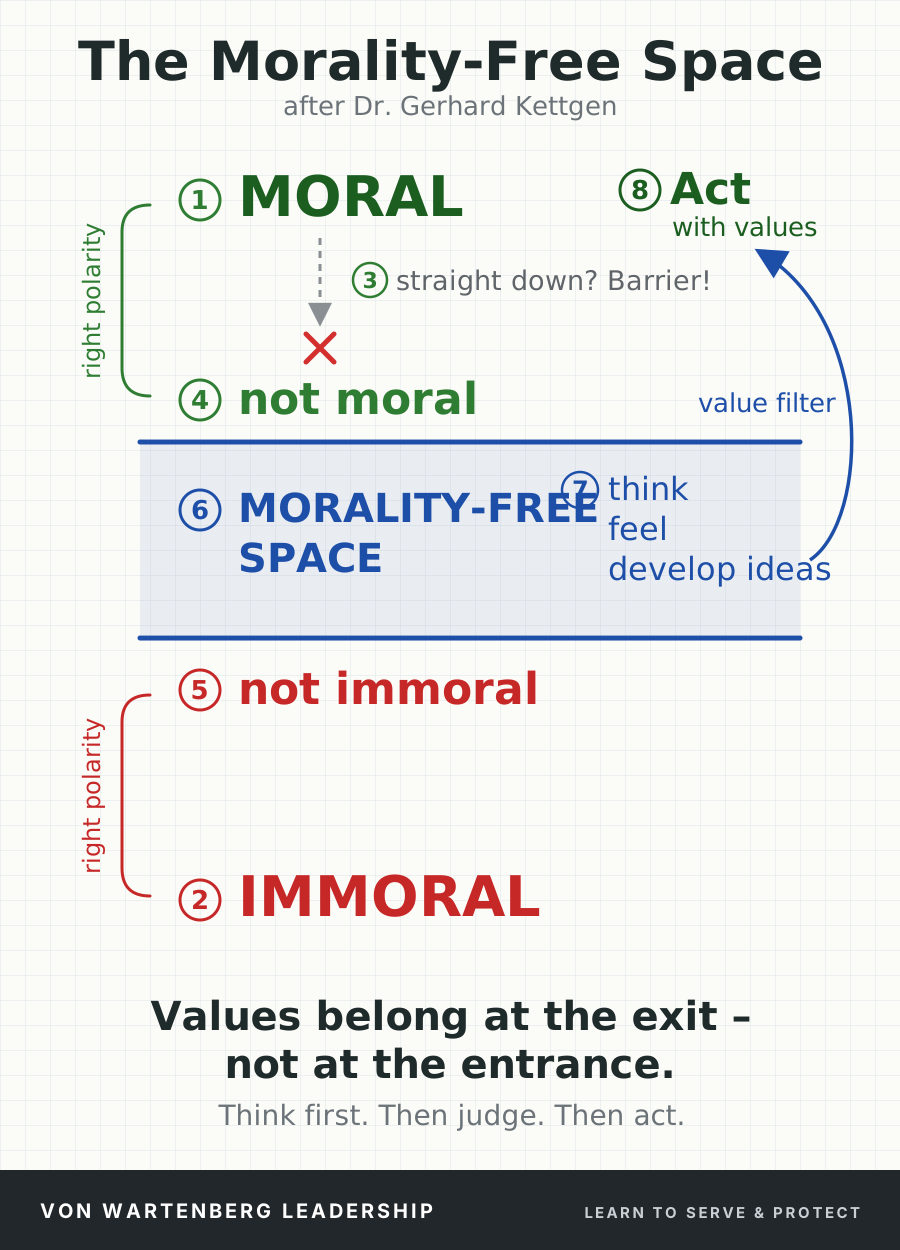
The model on a flipchart
This is how Gerhard explained it to me (see diagram):
- 1It says at the top “moral”.
- 2Below is the opposite “immoral”.
- 3If you try to think your way from top to bottom, you immediately feel immoral. The barrier closes – before you’ve even had time to think.
- 4Now here’s the trick: draw a line under ‘moral’ and call it “not moral”.
- 5You draw a second line at the word ‘immoral’: “not immoral”.
- 6In between lies the a space devoid of morality.
- 7Here, you may think, feel, develop ideas – without mental barriers.
- 8Some of these ideas are morally justifiable. And they lead to the Trade – in line with your values.
The crux of the matter lies in the correct polarity. The opposite of ‘moral’ is not ‘immoral’, but ‘not moral’. And the opposite of ‘immoral’ is ‘not immoral’. Between these two lines lies a space that our everyday morality tends to overlook – and it is precisely there that the best solutions are often to be found.
"Values" at the output, not at the input
For me, that’s the real ‘aha’ moment: The values don’t disappear. They just move to a different place. Instead of nipping every idea in the bud at the start, they’re there at the end – acting as a filter before you take action.
Gerhard and I think very highly of a a solid ethical foundation For managers: appreciation and respect, recognition and criticism, humanity and love. It is precisely because this foundation is solid that you can afford to think freely beforehand.
An example from everyday management practice
Imagine this: a team member is highly skilled, but has been a burden on the whole team for months. The usual mindset kicks in straight away: ‘You don’t let anyone down.’ – ‘He’s achieved so much.’ – ‘Who am I to judge?’
In a space free from moral judgement, start by sorting things out: What are the facts? How does this make you feel? What options are there – all of them, even the uncomfortable ones? An open conversation, a new role, clear consequences, a break-up.
Only then do you set out your values. And perhaps you’ll end up having a very clear, very honest conversation with real consequences – respectful, but without beating about the bush. A solution that you might not have allowed yourself to consider beforehand.
Here’s how to give it a go
- 1Name the decision – and the moral voices that speak out straight away.
- 2Draw the two lines deliberately. Tell yourself: ‘I’m just thinking for now. I’m not making a decision just yet.’
- 3Collect options – even those that feel wrong at first. Allow yourself to feel these emotions without judging them.
- 4Set up your values as filters. What options can you advocate whilst demonstrating appreciation, respect and humanity?
- 5Take action – and stand by it. It’s perfectly fine for your own interests to play a part in this. However, the solution should be in line with your ethical values.
In conclusion
A space devoid of morality is not a place without values. It is a place that transcends values. A space where you first see things clearly – and then make a conscious decision.
How do you deal with difficult decisions? Do your moral instincts sometimes kick in too soon? I look forward to the discussion at LinkedIn (external link, opens in a new tab).
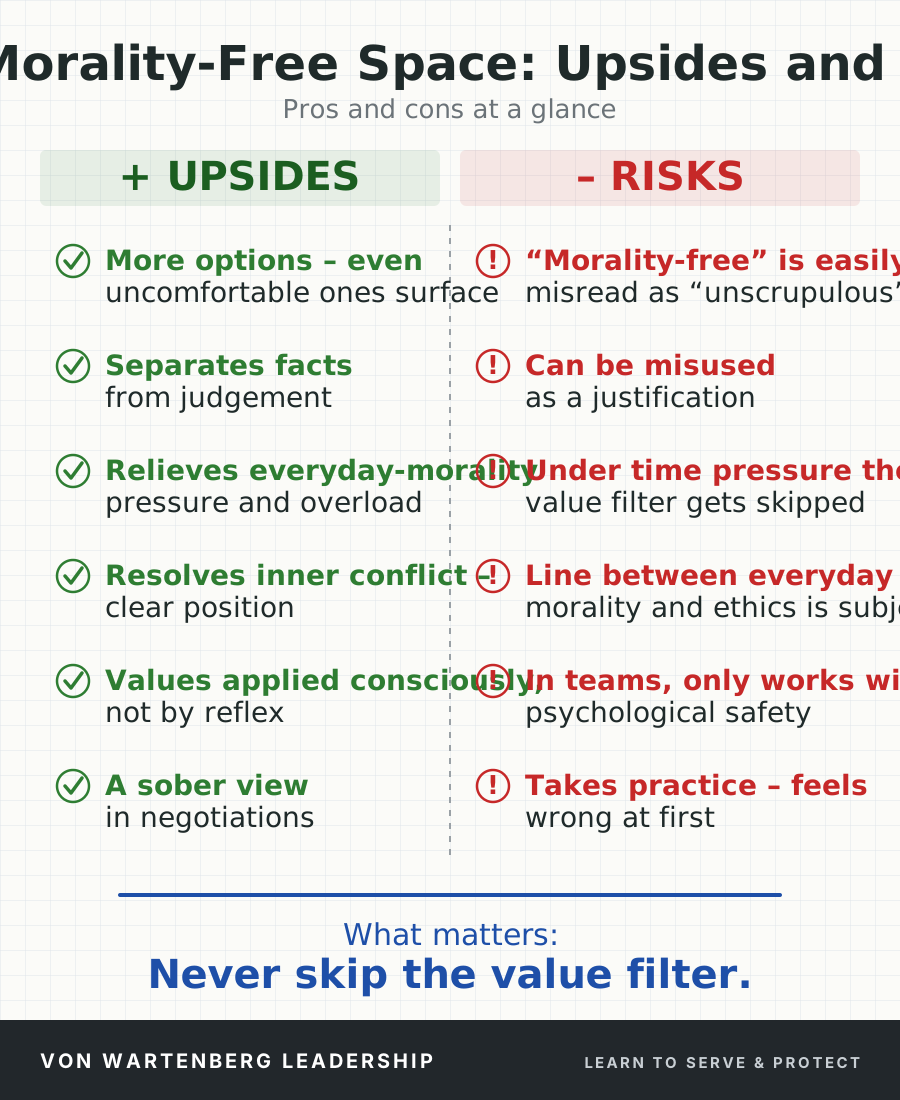
Addendum: Advantages and disadvantages
Above all, this approach offers more options and less internal resistance; its greatest risk lies in the term ‘morally free’ itself and a failure to apply a values-based filter.
Dr Peter von Wartenberg (10.26)
Based on the work of Dr Gerhard Kettgen.
Learn to Serve and Protect – Leading My Business